Description
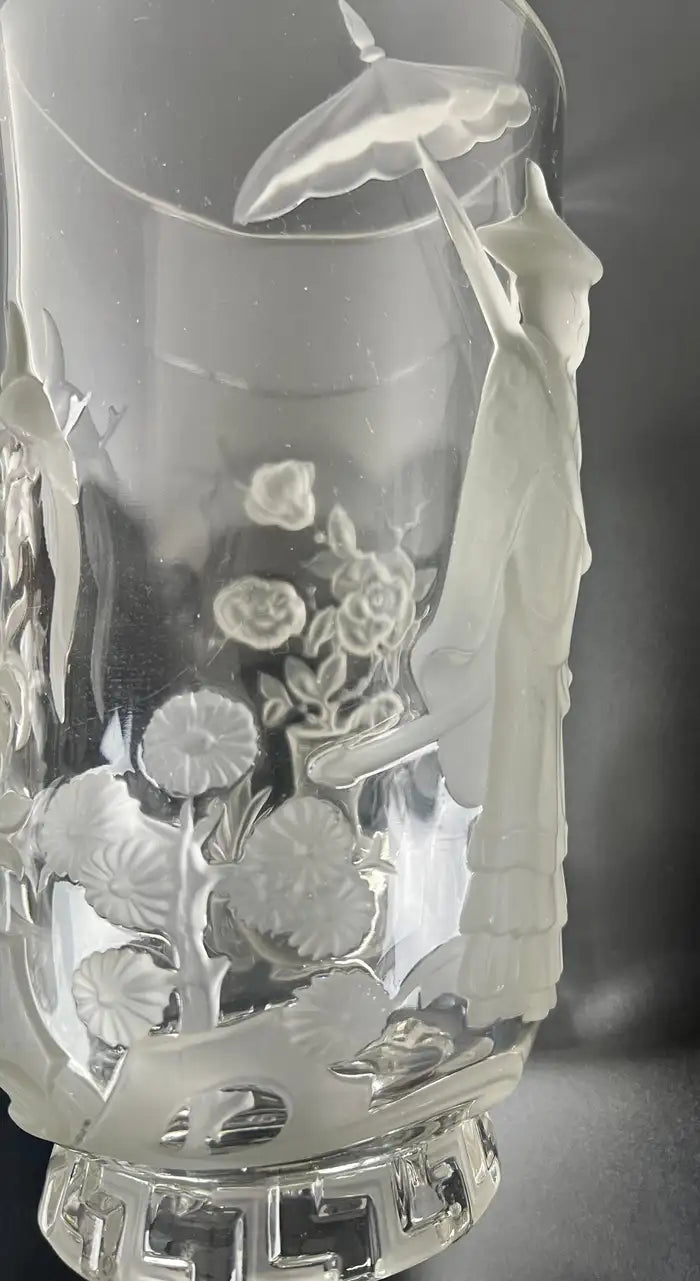
Verlys French Art Glass “Mandarin” Vase — Frosted and Clear Relief Design, circa 1930s This exquisite Verlys art glass vase, titled “Mandarin,” exemplifies the refined craftsmanship and sculptural artistry of French glassmaking during the Art Deco period. Created in the 1930s by Les Verreries d’Art Verlys, the vase is masterfully executed in molded and pressed glass (moulé-pressé) — a technique in which molten glass is pressed into a detailed metal mold to capture the design in sculptural relief. The piece depicts a serene Mandarin figure amid stylized foliage, rendered in high-relief frosted glass against a clear polished background, producing a striking play of light and texture. The frosted finish was achieved through acid etching and sandblasting, techniques that create a soft satin surface contrasting beautifully with the luminous transparency of the glass. Like Lalique and Sabino, Verlys was celebrated for combining technical innovation with poetic artistry — yet Verlys distinguished itself through a slightly crisper modeling and greater emphasis on sculptural depth, giving its pieces a more architectural presence.
Maker: Verlys, France Model: Mandarin Vase Period: Circa 1930s Material: Molded, pressed, and frosted glass Style: Art Deco / Orientalist influence Dimensions: Approx. 9.75” H × 5” D Documentation : Signed in the Bottom Condition: Excellent vintage condition, minor wear consistent with age
Verlys — French Art Glass, 1930s–1950s : Verlys was the trade name of Les Verreries d’Art Verlys, a distinguished French glassworks founded in 1931 in Andelys, Normandy, by the Société Holophane Française. Initially known for producing precision optical glass, the company soon turned its technical expertise toward the creation of decorative art glass during the height of the Art Deco movement. Verlys became celebrated for its molded and pressed glass vases, bowls, and lighting, featuring frosted and clear relief designs that combined sculptural depth with refined luminosity. Common motifs included floral compositions, aquatic themes, female figures, and Orientalist scenes — all rendered with a distinctive balance of elegance and precision.
Description
Verlys French Art Glass “Mandarin” Vase — Frosted and Clear Relief Design, circa 1930s This exquisite Verlys art glass vase, titled “Mandarin,” exemplifies the refined craftsmanship and sculptural artistry of French glassmaking during the Art Deco period. Created in the 1930s by Les Verreries d’Art Verlys, the vase is masterfully executed in molded and pressed glass (moulé-pressé) — a technique in which molten glass is pressed into a detailed metal mold to capture the design in sculptural relief. The piece depicts a serene Mandarin figure amid stylized foliage, rendered in high-relief frosted glass against a clear polished background, producing a striking play of light and texture. The frosted finish was achieved through acid etching and sandblasting, techniques that create a soft satin surface contrasting beautifully with the luminous transparency of the glass. Like Lalique and Sabino, Verlys was celebrated for combining technical innovation with poetic artistry — yet Verlys distinguished itself through a slightly crisper modeling and greater emphasis on sculptural depth, giving its pieces a more architectural presence.
Maker: Verlys, France Model: Mandarin Vase Period: Circa 1930s Material: Molded, pressed, and frosted glass Style: Art Deco / Orientalist influence Dimensions: Approx. 9.75” H × 5” D Documentation : Signed in the Bottom Condition: Excellent vintage condition, minor wear consistent with age
Verlys — French Art Glass, 1930s–1950s : Verlys was the trade name of Les Verreries d’Art Verlys, a distinguished French glassworks founded in 1931 in Andelys, Normandy, by the Société Holophane Française. Initially known for producing precision optical glass, the company soon turned its technical expertise toward the creation of decorative art glass during the height of the Art Deco movement. Verlys became celebrated for its molded and pressed glass vases, bowls, and lighting, featuring frosted and clear relief designs that combined sculptural depth with refined luminosity. Common motifs included floral compositions, aquatic themes, female figures, and Orientalist scenes — all rendered with a distinctive balance of elegance and precision.